조오지 러셀
GRussellElSonata68cover.JPG
Studio album by George Russell
Released/1969 / 1980
Recorded/April 28, 1969 (1968 Version)/ June 9 & 10 1980 (1980 Version)
Genre/ Avant-garde jazz
Length/51:49 (1968 Version)/ 48:13 (1980 Version)
Label/Flying Dutchman Records/ Strata-East Records/ Soul Note
George Russell chronology
George Russell Sextet at Beethoven Hall
(1965) Electronic Sonata for Souls Loved by Nature
(1969) Trip to Prillarguri
(1970)
1980 Soul Note Recording
Allmusic 5/5 stars
The Rolling Stone Jazz Record Guide 4/5 stars
Electronic Sonata for Souls Loved by Nature는 1968년에 오리지널 원곡이 재즈 편곡가George Russell의 작품이며 처음으로 1969년 4월 28일에 노르웨이의 콘서트에서 녹음되었다가 레이블 Flying Dutchman에서 발매했다. 1969년의 녹음에서는 Jan Garbarek, Manfred Schoof, Terje Rypdal, Jon Christensen, Red Mitchell과 함께 Russell이 나타났으며 1974년의 레이블 Strata-East Records에서 연속적으로 LP로 발매했다.
Russell은 1980년에 Jean-François Jenny-Clark, Victor Comer, Keith Copeland, Robert Moore and Lew Soloff과 함께 이 곡을 다시 재방문 했다. 그것은 1980년에 LP로 1985년에 CD로 이탈리아 레이블 Soul Note에서 발매되었다.
Track listing\1969 Version
1."Events 1-2-3-4-5-6-7" - 25:36
2."Events 8-9-10-11-12-13-14" - 26:13
1980 Version
1."Events 1-2-3-4-5-6-7" - 23:45
2."Events 8-9-10-11-12-13-14" - 24:28
Personnel
1969 recording[edit]
Jan Garbarek: tenor saxophone
Manfred Schoof: trumpet
Terje Rypdal: electric guitar
Jon Christensen: drums
Red Mitchell: bass
George Russell: piano
Recorded live at the Sonja Henie/Neils onstad Center Oslo April 1969
1980 recording
Jean-François Jenny-Clark: bass
Victor Comer: guitar
Keith Copeland: percussion
Robert Moore: saxophones
Lew Soloff: trumpet
George Russell: piano, organ
Recorded June 9 & 10, 1980 at Barigozzi Studio, Milan
AllMusic의 Ron Wynn의 리뷰
작곡가, 이론가, 편곡가, 피아니스트인 George Russell은 노르웨이 콘서트에서 1969년 4월 28일에 "Electronic Sonata for Souls Loved By Nature"라는 마스터 작곡으로 데뷔했다. 러셀은 일렉트로닉 효과와 테이프와 보컬부분을 섞을 뿐만 아니라 비밥, 프리, 아시아, 그리고 블루스적 요서를 섞은 야망이 있고 정교한 작업을 해냈다. 그것은 순전히 경험의 무게에 의해 격한 감정에 휩싸이지 않은 트럼펫 연주자 Manfred Schoof, 테너 색소포니스트 Jan Garbarek, 기타리스트 Terje Rypdal, 베이스 연주자 Red Mitchell, 드러머 John Christensen 의 절묘한 기량을 펼친 증거물이었다. 이 디지털 마스터링은 감상자에게 충분히 이 이질적인 스타일이 집중되어있고 얼마나 Russell의 개념, 특히나 시간에 대한 개념을 이해하기 불가능하게 한다. 모든 것들이 완벽한 작품은 아니나 이것은 재즈의 가장 멋지고 모험적인 작품 중의 하나로서 Ornette Coleman의 "Free Jazz"와 어깨를 나란히 할 작품이다.
The Essence of George Russell - Electric Sonata for Souls Loved Part I - Part II - Part III - YouTube
http://me2.do/xaGzbD2h
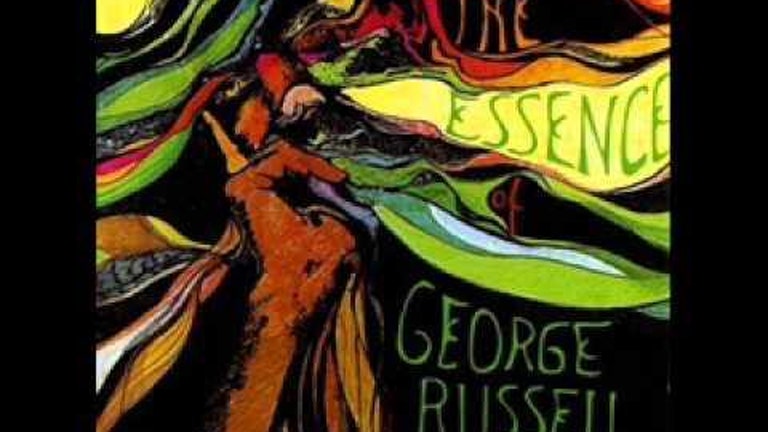
"Electronic Sonata for Souls loved by Nature
The Essence of George Russell - Electric Sonata for Souls Loved Part I - Part II - Part III "Electric Sonata for Souls Loved by Nature - Part I" - 00:00
"Electric Sonata for Souls Loved by Nature - Part II" - 19:46
"Electric Sonata for Souls Loved by Nature - Part III" - 39:36
Whole Album:
All compositions by George Russell
1 "Electric Sonata for Souls Loved by Nature - Part I" -
2 "Electric Sonata for Souls Loved by Nature - Part II" -
3 "Electric Sonata for Souls Loved by Nature - Part III" -
4 "Now and Then" -
Recorded in Stockholm, Sweden 1966 & 1967.
George Russell - piano, conductor
Jan Garbarek - tenor saxophone
Jon Christensen - drums
Jan Allan, Maffy Falay, Bertil Lövgren - trumpet
Erik Nilsson - baritone saxophone, bass clarinet, flute
Rune Gustafsson - guitar
Stanton Davis - trumpet, flugelhorn (tracks 1-3)
Terje Rypdal - electric guitar (tracks 1-3)
Arild Andersen - bass (tracks 1-3)
Lars Samuelsson - trumpet (tracks 1-3)
Arne Domnerus - alto saxophone, clarinet (tracks 1-3)
Claes Rosendahl - tenor saxophone, alto saxophone, soprano saxophone, flute (tracks 1-3)
Lennart Åberg - tenor saxophone, soprano saxophone, flute (tracks 1-3)
Olle Lind - bass trombone (tracks 1-3)
Berndt Egerbladh - vibraphone, xylophone (tracks 1-3)
Bengt Hallberg - piano (tracks 1-3)
Georg Riedel - bass (tracks 1-3)
Egil Johansen - drums (tracks 1-3)
Sabu Martinez - congas (tracks 1-3)
Georg Vernon, Gunnar Medberg - trombone (track 4)
Runo Ericksson - bass trombone (track 4)
Christer Boustedt, Claes Rosendahl - alto saxophone (track 4)
Bernt Rosengren - tenor saxophone (track 4)
Roman Dylag - bass (track 4)
Rupert Clemendore - congas (track 4)
1) "Electronic Sonata for Souls loved by Nature" the correct title.
2) The Album was recorded live on April 28,1969 in Oslo, Norway
and consisted of Part I and II on the original release
The electronic tapes had been recorded before in Stockholm, Sweden
The african vocals and the lute had been recorded in Northern Uganda in 1967
3) The correct line-up for Part I and II - the Album Version - is as follows
Bass - Red Mitchell
Drums - Jon Christensen
Electric guitar - Terje Rypdal
Piano, Composer, Producer - George Russell
Tenor Saxophone - Jan Garbarek
Trumpet - Manfred Schoof
George Russell (composer)
George Allen Russell (June 23, 1923 – July 27, 2009)은 미국의 재즈 피아니스트, 작곡가, 편곡가, 그리고 이론가이다. 그는 그의 책 Lydian Chromatic Concept of Tonal Organization (1953)에서 유럽음악보다 재즈에 기초를 둔 하모니 이론과 함께 일반적인 음악 이론에 공헌한 첫 번째 재즈 음악가중의 하나로 여겨진다.
초기의 삶Early life
Russell은 백인 아버지와 흑인 어머니 사이에서 오하이오Ohio주 Cincinnati에서 태어나 the B & O Railroad의 요리사와 간호사인 Bessie 와 Joseph Russell의 유일한 아이로 입양되었다. 어린 Russell은 African Methodist Episcopal 교회의 합창단에서 노래 불렀고 Fate Marable의 Kentucky Riverboat을 들었다. 그는 Fats Waller와 함께 "Moon Over Miami"를 부르며 7살에 첫 데뷔 무대를 가졌다.
Oberlin College의 음악 교육가였던 아버지와 함께, Ohio Riverboats에서 연주하는 빅밴드와 흑인 교회의 음악에 둘러싸여 그는 the Boy Scouts and Bugle Corps과 함께 드럼을 연주하기 시작했으며 Ben Webster, Coleman Hawkins, Charles Freeman Lee, Frank Foster, Benny Carter를 포함한 위대한 재즈 음악가들을 키워낸 밴드인 Collegians에 조인했던 Wilberforce 대학의 장학금을 받았다. Russell은 다른 재즈 작곡가 Ernie Wilkins와 동시에 그 밴드에서 연주했다. 세계 2차 대전의 초기에 병역에 소집되었을 때 러셀은 폐결핵으로 병원에 입원했으며 그곳에서 그는 같은 입원환자들에 의해 음악 이론의 기초를 배우게 되었다.
초기의 경력 Early career
병원에서 나온 후 그는 Benny Carter의 밴드에서 드럼을 연주했으나 휴가 때 오케스트라 내에서 그를 대신했던 Max Roach의 음악을 들은 후에 드럼 연주를 포기하기로 결정했다. Thelonious Monk의 "'Round Midnight"을 듣고 영감을 받아 Russell은 1940년대 초에 뉴욕으로 옮겨가 그곳에서 후에 Modern Jazz Quartet의 음악 감독이었던 John Lewis와 Miles Davis, Charlie Parker, Gerry Mulligan이 포함되었던 한 집단, 55번지 Gil Evans의 아파트에 자주 출입했던 젊은 혁신자들의 집단의 멤버가 되었다.
1945–46년에 Russell은 다시 16개월 동안 패결핵으로 입원하게 되었다. Charlie Parker의 드러머로서의 작업을 강제로 거절한 후 그동안에 그는 재즈의 영역을 넘어 모든 동일하게 조절된 음악을 아우르는 이론인 그의 Lydian Chromatic Concept of Tonal Organization이 되기 위한 기본적인 교의를 작업해냈다. 그의 책의 첫 번째 에디션은 그가 Macy의 가게에서 판매원으로 일하는 동안인 1953년 러셀에 의해 출판되었다. 그 당시의 러셀의 생각은 Kind of Blue의 클래식 녹음을 했던 Miles Davis와 존 콜트레인의 모달 음악의 결정 적인 시작을 이끌었으며 에릭 돌피와 아트 파머 같은 다른 모더니스트들을 위한 선봉에 있었다.
그 이론 작업을 하는 동안 러셀은 또한 자신의 작곡에 이 원칙들을 적용했다. 그의 첫 번째 유명한 작곡은 the Dizzy Gillespie Orchestra, the two-part "Cubano Be, Cubano Bop" (1947)였고 비밥과 쿠바 재즈적 요소들을 섞은 밴드의 실험적인 성격이 짙은 작품이었다.
"A Bird in Igor's Yard" ( Charlie Parker와 Igor Stravinsky에게 헌정된)은 다음해에 Buddy DeFranco에 의해 이끄는 세션에서 녹음되었다. 또한 약간 덜 알려졌지만 중심이 되는 Gillespie and DeFranco를 위해 작업한 기술을 적용했던 러셀의 작품인 "Similau"라는 제목으로 Artie Shaw에 의해 1950년 1월에 녹음되었다.
Russell은 Bill Evans, Art Farmer, Hal McKusick, Barry Galbraith, Milt Hinton, Paul Motian과 다른 음악가들을 포함한 그룹의 시리즈물을 이끄는 피아노를 연주하기 시작했다. Jazz Workshop은 밴드 리더로서 그의 첫 번째 앨범이며 그가 이 앨범에서는 적게 연주했고 반대로 그 행사를 지휘 했다. 그는 때때로 피아니스트로서 다음 몇 년동안 인상적인 많은 수의 앨범을 녹음했다.
1957년에 Russell은 그들의 페스티발의 the Creative Art의 곡을 쓰기위해 Brandeis 대학에 의해 6명의 재즈 음악가들의 위원중의 하나가 되었다. 그는 다른 솔로이스트들 사이에 빌 에반스가 등장하며, 재즈에서의 다성 음악적 요소로 작곡한 몇 개의 확신 있는 예 중의 하나로서 간주되는 All About Rosie라는 오케스트라를 위한 모음곡을 썼다.
1958년 더욱더 확장된 오케스트라의 뉴욕 멤버는 다른 음악가들과 Bill Evans, John Coltrane, Art Farmer, Milt Hinton, Bob Brookmeyer, Max Roach가 포함되었으며 가수이자 작사가인 Jon Hendrick의 끝이 굽은 랩들이 모습을 나타냈다. Jazz in the Space Age (1960)는 훨씬 더 야망있는 빅밴드 앨범이며 Bill Evans와 Paul Bley의 특별한 두 개의 피아노가 목소리를 내고 있다. 루셀은 그가 피아노를 연주하는 그 자신의 6중주(sextet)를 구성했다. 1960년과 1963년 사이에 루셀의 식스텟은 Dave Baker와 Steve Swallow 같은 음악가들이 모습을 나타냈으며 기억할만한 세션으로 Eric Dolphy (on Ezz-thetics) 와 가수 Sheila Jordan (their bleak version of "You Are My Sunshine" on The Outer View (1962)가 참여하기도 했다.
유럽 활동 Europe
1964년에 반이 흑인인 Mr. Russell은 미국에서의 인종 차별에 크게 실망해서 스칸디나비아반도로 옮겼다. 그는 그의 식스텟과 함께 유럽 연주여행을 했고 5년동안 스칸디나비아반도에서 살았다. 1970년대 초기에 러셀은 노르웨이와 스웨덴에서 그의 작업중 가장 많은 부분을 해냈다. 그는 그곳에서 젊은 음악가들 나중에 국제적인 명성을 떨쳤던 기타리스트 Terje Rypdal, 색소포니스트 Jan Garbarek, 드러머 Jon Christensen과 함께 연주했다.
이 스칸디나비아 기간은 또한 그에게 좀 더 큰 그룹을 위한 작품을 쓰는 기회를 주었고 리듬의 작용에 의해 여러 층의 갈라지는 방식이라고 묘사되는 “총체적인 형식 "vertical form",”인 그의 생각들을 추구하는 러셀의 규모가 큰 작품들이 나왔다. 라디오 오케스트라를 위한 스웨덴 라디오의 Bosse Broberg에 의해 위임되어서 작곡한 The Electronic Sonata for Souls Loved by Nature는 일렉트로닉 테이프와 함께 녹음된 확장 적인 작품으로 1968년 첫 번째로 녹음되었다. 러셀은 이 작품에서 새로운 접근과 새로운 악기의 확장을 계속 추구했다.
Russell은 Gunther Schuller이 보스톤에서 New England Conservatory of Music을 맡고 루셀을 새롭게 만든 재즈 연구 파트인 the Lydian Concept에서 가르치도록 한 1969년에 미국으로 돌아갔다. 이 직위에서 그는 여러 해 동안 일했다. 러셀은 그 자신의 그룹과 함께 연주여행을 하며 끈질기게 the Lydian Concept을 개발해나갔다. 그는 그의 14명의 오케스트라 혹은 더 많은 수와 함께 the Bottom Line, Newport, Wolftrap, The Village Vanguard, Carnegie Hall, Sweet Basil에서 연주했다.
후반의 작업들 Later works
1970년대에 러셀은 3개의 대작을 쓰고 녹음하도록 위임되었다. 큰 오케스트라와 합창단원을 위해 노르웨이 문화 기금, Listen to the Silence, 콜롬비아 레코드사의 Bill Evans 에 의해 위임된 Living Time 와 스웨덴 라디오를 위한 Vertical Form VI.
With Living Time (1972)에서 러셀은 인간 삶의 무대를 나타내는 작곡들의 모음집을 선보이도록 빌 에반스와 함께 다시 결합했다. American Time Spiral 에서의 그의 라이브에서는 대 성공를 예약한 Tom Harrell과 Ray Anderson을 포함한 뉴욕이 많은 젊은 연주가가 모습을 나타냈다. 그가 1985년 작품 The African Game을 위한 오케스트라를 구성할 수 있었을 때 그는 그것을 재녹음했다. 이 14명의 앙상블은 빌리지 뱅거드에서 몇 주동안 연주하면서 미국과 유럽으로 연주여행을 했다. 그리고 뉴욕 잡지에서 “몇 해 만에 이 도시에 히트를 기록한 가장 흥미로운 오케스트라”라는 칭찬을 받았다. 25명의 음악가를 위한 45분짜리 작품인 The African Game는 뉴욕 타임즈의 Robert Palmer에 의해 “과거 몇 십 년만에 가장 중요하게 새롭게 발매된 것 중의 하나”라고 설명했꼬 1985년 러셀은 두 개의 그래미에 노미네이트 되었다.
러셀은 1984년 후에 확장된 9개의 곡을 썼다. 그들 중 Timeline for symphonic orchestra, jazz orchestra, chorus, klezmer band and soloists는 뉴잉글랜드 음악당의 125주년 기념식을 위해 작곡 되었고 1994년 파리에서 the Cité de la Musique 에 의해 위임된 a re-orchestration of Living Time for Russell's orchestra and additional musicians, 그리고 1995년에 The Arts Council of England and the Swedish Concert Bureau에 의해 공동 위임된 It's About Time이 있다.
1986년 러셀은 미국과 영국 음악가들 그룹과 함께 연주 여행을 했고 오늘 날에도 여전히 공연과 연주 여행을 하는 The International Living Time Orchestra를 조직하기에 이르렀다. 그는 Dave Bargeron, Steve Lodder, Tiger Okoshi, Brad Hatfield, Andy Sheppard과 함께 연주했다.
조오지 러셀은 2009년 7월 27일에 메샤추세츠 보스톤에서 알츠하이머병의 합병증으로 사망했다.
Awards
He received a MacArthur Foundation "genius" grant in 1989. In his career, Russell also received the 1990 National Endowment for the Arts American Jazz Master Award, two Guggenheim Fellowships, and the British Jazz Award, among others. He has been elected a Foreign Member of the Royal Swedish Academy, won the Oscar du Disque de Jazz Award, the Guardian Award, the American Music Award, six NEA Music Fellowships and numerous others.[10] He taught throughout the world, and was a guest conductor for German, Italian, Danish, Finnish, Norwegian, and Swedish radio groups.
음악 이론 Music theory
루셀의 Lydian Chromatic Concept of Tonal Organization은 화음과 함께 규모와 어울리는 것으로 다시 개념화되었다. 온음계의 큰 규모의 전통적인 접근이 이루어졌던 반면에 While the conventional approach to the diatonic major scale is founded on the tones of the Ionian major scale in accordance with classical theory (C, D, E, F, G, A, B for the C major scale, etc.) the LCC derives the scales based on the series of fifths stacked from the root tones of chords with a major third. In the key of C, the stacked fifth series includes C, G, D, A, E, B, and F#, which provide an alternate seven tone division for the C major scale with a raised, or augmented, fourth tone. The resulting scale, with an augmented fourth (F#) instead of a perfect fourth (F), has more consonance than the conventional Ionian diatonic major scale over chords, avoiding the dissonant half-step from the major third (E). With the conventional major scale, dissonance is avoided by omitting the perfect fourth; by using the Lydian mode with the more consonant augmented fourth, the player or composer gains the tonal freedom that facilitates modal playing over chords with a major third. Lydian major-third chords are specified with a #11, which is equivalent to the #4 in the scale.
It was a remark made by Miles Davis in 1945 when Russell asked him his musical aim that led Russell on a quest which was to lead to his theoretical breakthrough. Davis answered that his musical aim was "to learn all the changes." Knowing that Davis already knew how to arpeggiate each chord, Russell reasoned that he really meant that he wanted to find a new and broader way to relate to chords. As music scholars Cooke and Horne wrote:
Russell codified the modal approach to harmony...inspired by a casual remark the eighteen-year-old Miles Davis made to him in 1944: Miles said he wanted to learn all the changes and I reasoned he might try to find the closest scale for every chord...Davis popularized those liberating ideas in recordings like Kind of Blue, undermining the entire harmonic foundation of bop that had inspired him and Russell in the first place.[11]
Miles reportedly summarized the LCC succinctly by saying, "F should be where middle C is on the piano" [white notes: F-F = lydian, rather than major = C-C].
The Lydian Chromatic Concept was the first codified original theory to come from jazz. Musicians who assimilated Russell's ideas expanded their harmonic language beyond that of bebop, into the realm of post-bop. Russell's ideas influenced the development of modal jazz, notably in the album Jazz Workshop (1957, with Bill Evans and featuring the "Concerto for Billy the Kid") as well as his writings. Miles Davis also pushed into modal playing with the composition Miles on his 1957 album Milestones. Davis and Evans later collaborated on the 1959 album Kind of Blue, which featured modal composition and playing. John Coltrane explored modal playing for several years after playing on Kind of Blue.
His Lydian Concept has been described as making available resources rather than imposing constraints on musicians. According to the influential 20th century composer Toru Takemitsu, "The Lydian Chromatic Concept is one of the two most splendid books about music; the other is My Musical Language by Messiaen. Though I'm considered a contemporary music composer, if I dare categorize myself as an artist, I've been strongly influenced by the Lydian Concept, which is not simply a musical method—we might call it a philosophy of music, or we might call it poetry."
The major scale probably emerged as the predominating scale of Western music, because within its seven tones lies the most fundamental harmonic progression of the classical era....thus, the major scale resolves to its tonic major chord. The Lydian scale is the sound of its tonic major chord.
'재즈' 카테고리의 다른 글
| Some Other Spring/ Karin Krog with Dexter Gordon (0) | 2017.04.16 |
|---|---|
| Jacob Young 제이컵 영 (0) | 2017.04.16 |
| Trygve Seim 트리베그 자임 (0) | 2017.04.15 |
| Solveig Slettahjell 솔베이그 슬레타옐 (0) | 2017.04.15 |
| Esbjörn Svensson Trio (Seven Days Of Falling/Elevation of Love) (0) | 2017.04.15 |